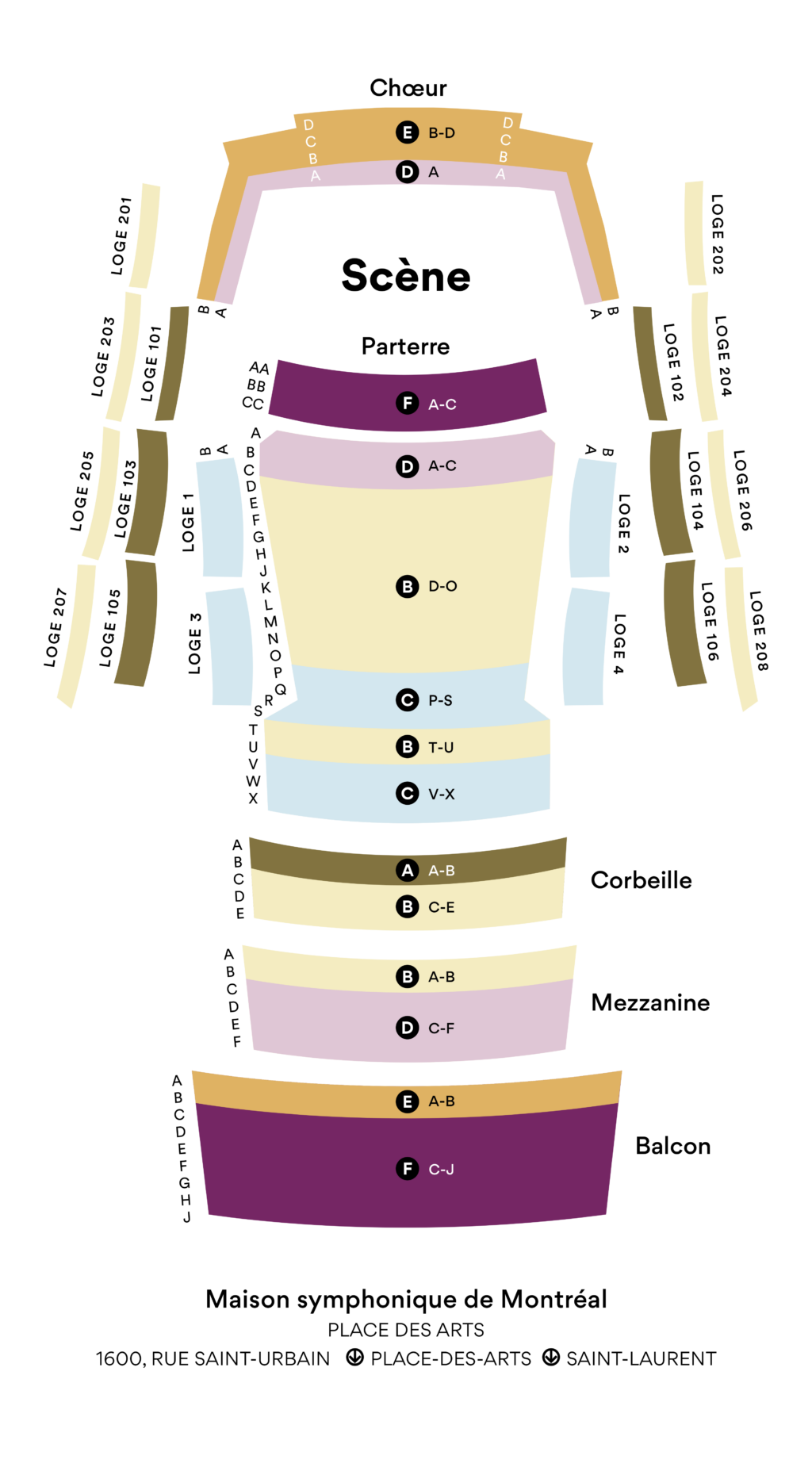
Andromeda (Maison symphonique only)
Augusta HOLMÈS
1847-1903
Mythological Inspiration
Somewhat forgotten today, the name Augusta Holmès evokes a glorious era of French music. Of British origin, this student of César Franck, admired by Rossini, Liszt, and Saint-Saëns, was one of the rare female composers of the 19th century to be recognized and performed during her lifetime. Author of several symphonies, symphonic poems, and four operas, her talent and personality made her a celebrated figure in Parisian musical life after the Second Empire.
Composed in 1883, her symphonic poem Andromède premiered on January 14, 1900, at the Concerts Colonne in Paris. It draws inspiration from the myth of Andromeda, the Ethiopian princess chained to a rock and condemned to be devoured by a sea monster, until she is rescued by the hero Perseus. The work was well received, especially by critics who praised its generous inspiration, luminous character, and rich orchestration, placing the composer in the lineage of two great models: Wagner and Franck.